

Carpet tiles have become one of the popular choices for floor covering in both residential and commercial spaces. There are good reasons for this; they offer a mix of design choices, practical floor covering, and comfort in a way that you just don’t get with a wall-to-wall carpet. This can be for your office renovation or home flooring covering upgrade – these carpet tiles will be a smart and stylish choice. But the real questions are what carpet tiles are and when you should use them. We will answer these and many other questions in detail today.
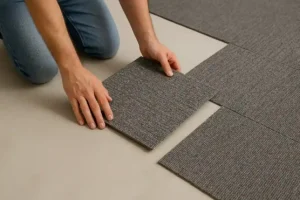
What Are Carpet Tiles?
Carpet tiles are also called modular carpet tiles, which are small, square sections of a floor carpet. These are designed to fit together in a smooth manner instead of a carpet roll that is too bulky to transport and install. A standard carpet tile will have a size of 50*50cm or 60*60cm, and they are usually made of materials like nylon, recycled fibers, or polypropylene.
What makes these floor coverings a unique option is their modular nature, where you can mix colors, textures, and patterns for custom flooring designs. This design flexibility is what makes them ideal for spaces where you need a mix of style and function.
When to Use Carpet Tiles?
You must know when is the right time to use carpet tiles, as it will make a huge difference in their longevity and comfort. These carpet tiles are ideal for use in;
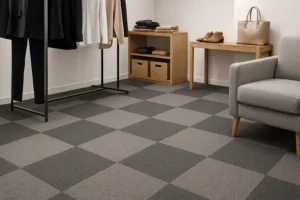
- Offices and commercial areas that see heavy foot traffic.
- Rooms in a home, like a basement, a kids’ play room or a bedroom.
- Hospitality settings such as lounges or hotels.
- Retail stores require design flexibility for ease of maintenance.
In short, these tiles work best in spaces that require durability and low maintenance with design-friendly floor covering.
Benefits of Carpet Tiles
There are quite a lot of benefits to carpet tiles, all thanks to their design. They are not like your average carpets that will need to be completely replaced if they are damaged. You can easily replace the individual carpet tile to save both time and cost. Some of the key benefits of these carpet tiles are as follows.
(i). You get the ease of installation as it requires no professional tools or a premium-grade adhesive for its fitting.
(ii). These carpet tiles are a perfect solution for the high traffic areas where the floor covering gets a lot of foot wear.
(iii). Carpet tiles will offer design flexibility with multiple colors and patterns available for the same fabric to create stunning combinations.
(iv). They help to reduce the noise and echo in your open-plan spaces for better noise-proofing.
(v). Most brands will use recycled or eco-friendly materials to ensure the trend of sustainability in home renovation projects.
Carpet Tiles for Offices
The use of carpet tiles for offices is not just about the simple décor ambience. In a high-traffic workspace, these carpet tiles will act as perfect sound insulation material and are highly durable. With these tiles installed, you get a focused workspace that is a whole lot quieter. Carpet tiles are the easiest way to designate zones for certain tasks or activities, with the mixing & matching of colors or patterns. This can be done to designate meeting areas, relaxation zones for employees, or workstations.
Additionally, if any area gets stained or worn down, you can get its replacement without affecting the rest of the tiles. This cost-effectiveness in both first-time installation and repair makes it an ideal choice for modern offices.
Modular Carpet Tiles for Home
Most homeowners had no idea about what these carpet tiles were. But now, they are discovering the charm of the modular carpet tiles for the home. These tiles will work perfectly in rooms like the bedroom, basement, and living room. These floor covering fabric tiles will take care of the moisture and offer sound insulation, a perfect choice for a place with varying climates.
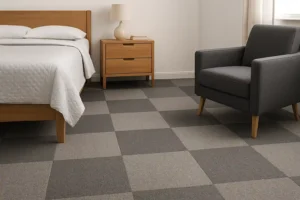
Unlike wall-to-wall carpets, these modular tiles will offer creative design freedom. You can go for the checkboard pattern or a mixed tone one, and if you like it, you can create borders with these carpet tiles for a customized look.
Commercial Carpet Tiles Advantages
The commercial carpet tiles’ advantages are evident in a large space such as an educational institute, office, and an spaces. These tiles are designed to take care of the constant foot traffic, resist stains, and maintain the overall appearance. In addition to this, these commercial carpet tiles will help create a safer indoor space by preventing any risk of slips and falls. The modular nature also reduces the time it takes to install if you are looking for quick renovation work.
How to Install Carpet Tiles?
The one main reason these carpet tiles have become popular is because of how easy it is to install them. Here is a step-by-step guide to let you know how to install carpet tiles even if you are a complete beginner.
Step 1: Prepare The Surface
You should first clean the flooring surface and make sure it is dry and level.
Step 2: Play For the Layout
Planning for the exact area of coverage is also important. You can do this by starting from the room’s center and working your way outward to create a symmetry of design.
Step 3: Lay the Carpet Tiles
You must align each of the carpet tiles carefully by using the adhesive dots on the backside. A cost-effective and clean option is to use peel-and-stick carpet tiles.
Step 4: Trim The Edges
If there are regular spaces or tight corners where an entire tile cannot fit, you should trim that area. For that, we recommend using a sharp utility knife to ensure clean cuts.
Step 5: Press Down Firmly
You must finish the installation process by firmly pressing on each carpet tile. This will prevent the tile from lifting and shifting later.
Carpet Tile Maintenance Tips
Maintenance of the carpet tiles is much easier compared to your average carpet. Some of our recommended carpet tile maintenance tips are as follows, which allow the carpet to remain fresh for years to come.
- You must vacuum these carpet tiles to prevent any buildup of dust and dirt.
- You must spot clean these fabric tiles in case of stains to prevent any long-lasting effect.
- It’s best to rotate your carpet tiles if a section wears faster. You must switch these tiles with a less-used area.
- The ideal way is to get a deep cleaning periodically, once a year.
When Should You Choose Carpet Tiles?
These carpet tiles are a perfect choice for anyone looking for a durable & low-maintenance flooring solution. This will be an ideal choice for a customizable design to meet your specific interior decor needs. It will also be a great choice for a quick installation and easy repair job. For those of you who value sound control and thermal comfort, these tiles are a godsend.
FAQs About Carpet Tiles
1. What Are Carpet Tiles Made Of?
These carpet floor tiles have a surface layer of nylon or polypropylene fibers that are highly resilient and stain-resistant. As for the backing layer, it is either PVC or bitumen that offers structural stability.
2. What exactly are carpet tiles?
These are modular, square-shaped fabric tiles that are designed for easy installation, maintenance, and replacement. They provide durability with aesthetic variety for floor covering.
3. What are the advantages of carpet tiles?
Carpet tiles are quite an affordable & cost-effective solution for floor coverings. They are easy to install and durable, allowing you to have many design possibilities for floor covering.
4. Where can carpet tiles be used?
You can use these carpet tiles in offices, homes, schools, and retail spaces where you need a quick yet durable floor covering solution.
5. Are carpet tiles good for bedrooms?
Yes, these tiles are a suitable option for bedroom floor covering needs, offering design flexibility and underfoot walking comfort.